The energy transition and the digitisation of infrastructure are revolutionising the way we produce, consume and manage energy. In this context, smart metering is emerging as a key technology for meeting the challenges of energy efficiency, effectiveness and network management.
In France, the widespread rollout of Linky smart meters for residential use illustrates the evolution of this new energy model.
Through the collection and analysis of real-time data, smart metering provides a better understanding of consumption patterns. It also makes it possible to anticipate needs, optimise costs and reduce carbon footprints.
This article explores this concept in depth: definition, types of data collected, benefits for public and private stakeholders, and the role of software solutions in leveraging this information.
What is smart metering?
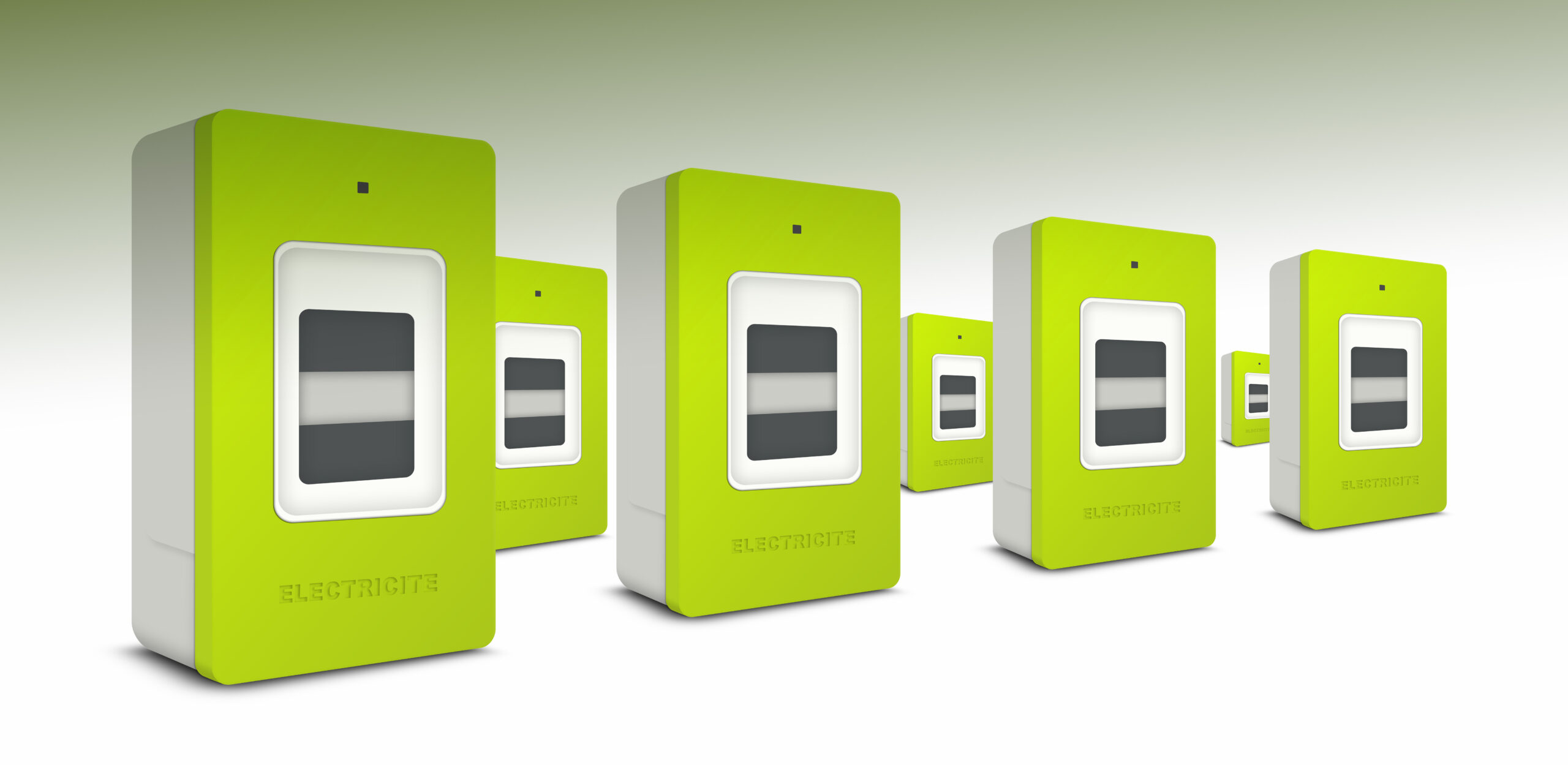
Smart metering refers to all technologies used to measure and transmit energy consumption data in real time or near real time.
Unlike traditional metering, which relies on manual readings and estimated billing, smart metering provides a dynamic and accurate view of usage.
The best-known example is the Linky meter, deployed by Enedis and Local Distribution Companies (ELD in French) in France for electricity, and its equivalent, Gazpar, for natural gas.
Technically, Linky is equipped with a Power Line Communication (CPL in French) communication module. This module transmits data via the electrical network to concentrators installed in distribution substations.
These hubs then send the information to central systems via secure connections (GPRS or fibre).
The meter continuously measures the power demand, voltage and consumption readings. It then sends this information at regular intervals.
The meter also includes anomaly detection functions (power surge, power cut). It can also be controlled remotely to modify the contracted power or to commission it.
Smart metering is therefore an essential component in the modernisation of electricity networks and the implementation of more efficient energy policies.
What types of data are collected?
Deploying smart meters, whether Linky for electricity or Gazpar for gas, generates a variety of strategic data.
This information is essential for understanding usage patterns, anticipating needs and optimising energy management.
Here are the main categories:
Detailed consumption data in Smart Metering
Smart meters enable consumption to be monitored with unprecedented granularity. Electricity measurements are taken every 10 to 30 minutes, providing a near real-time view of usage.
This precision facilitates the analysis of consumption profiles and the implementation of energy efficiency strategies.
Technical information and network quality
Beyond consumption data, meters can also provide technical indicators such as voltage, power demand, signal quality, and detection of faults or outages.
Frequency and granularity of feedback
The transmission frequency varies depending on the type of energy. For electricity, Linky records information every 10 to 30 minutes. This information is reported at least once a day, enabling dynamic monitoring.
This level of detail is an asset for comparative analyses and the detection of deviations.
Smart metering data storage and security
The information collected is stored in secure systems that comply with the GDPR. Operators use encryption protocols and authentication mechanisms to ensure confidentiality and prevent cyber attacks.
Security is a major issue, as this data is sensitive and strategic.
Advantages of smart meters and smart metering for network operators, local authorities and businesses
The rollout of smart metering systems represents a major advance in energy network management.
Precise monitoring and energy control
Smart metering provides unprecedented visibility into energy consumption.
Local authorities can monitor the energy consumption of public buildings (schools, town halls, sports facilities) in real time. This monitoring facilitates the implementation of energy efficiency plans and enables savings to be made.
Companies, for their part, have precise indicators to identify the most energy-intensive positions and adjust their processes.
This granularity enables a shift from a reactive approach to a proactive one, with quantified and measurable objectives.
Identification of deviations or critical periods
Thanks to frequent readings, it becomes possible to quickly detect anomalies: excessive consumption linked to faulty equipment, power peaks during periods of high activity, or residual consumption outside opening hours.
For local authorities, this means better anticipation of needs and a reduction in costs associated with power surges.
For businesses, it is a lever for avoiding tariff overruns (in conjunction with optimising the Tariff for the use of the public electricity network, for example (TURPE in French)) and optimising energy performance.
Process automation through smart metering
Smart metering simplifies administrative and technical management.
The collected data automatically feeds into billing systems, reducing errors and delays.
Configured alerts enable better planning of interventions before an incident becomes critical.
This automation frees up time for teams and improves infrastructure reliability.
Smart metering: a strategic asset for network operators
For network operators and managers, smart metering is a revolution.
It enables real-time monitoring of energy flows, anticipation of demand peaks, and optimisation of production and distribution capacities.
Data from smart meters facilitates the detection of incidents on the network. It reduces response times and contributes to the overall stability of the energy system.
At the national level, this supports the transition to smart grids, capable of integrating renewable energies and managing flexibility.
Strengthening the role of the end user
Smart meters do not only benefit managers: they also empower users.
Through portals or applications, each consumer can view their consumption, compare their usage and adopt more responsible behaviour.
For local authorities, this encourages citizens to embrace energy-saving policies.
For companies, it is an internal awareness-raising tool that can be integrated into a CSR approach.
Want to go further?
Discover our Opera solution.
The role of solutions such as Altsis’ Opera software in the use of smart metering data
Collecting data is not enough: it must be transformed into actionable indicators to effectively manage energy performance.
This is where platforms such as Opéra d’Altsis come in, playing a strategic role in leveraging data from smart metering.
- Centralisation and visualisation: Altsis aggregates information from smart meters (Linky, industrial SME-SMI meters, etc.) and other sources (SCADA network management systems) in a single environment. This consolidation avoids silos and provides a comprehensive overview.
- Advanced analysis modules: the solution offers specialised processing algorithms, dynamic dashboards and customised reports. Features include anomaly detection and correction (VEE Validation, Estimation, Editing). Opéra also allows comparison between different counting points (Measurement Reference Point) and scenario simulation to anticipate needs.
- Alerts and automation: Altsis’ Opéra solution allows you to configure alerts when thresholds are exceeded. It can also automate certain actions such as generating regulatory publications or performance reports.
- Interoperability and connectivity: thanks to its native connectors (API in French), the platform integrates easily with existing systems (ERP, CMMS, invoicing solutions, mapping systems, CRM) and network managers’ infrastructures.
In summary, Opéra transforms raw data to enable stakeholders to make strategic decisions. Opéra enables local authorities, businesses and operators to move from a measurement-based approach to an intelligent management approach.
Smart metering, the foundation of the digital energy transition
Smart metering is much more than just a connected meter. It is the foundation of a digital energy transition where data becomes a lever for efficiency and sustainability.
To support this transformation, Altsis positions itself as a strategic partner, capable of converting data into actionable information.
Want to go further?
Discover how Altsis can help you manage your consumption intelligently.