
An incident management software also centralises the management of service requests, enabling technical teams to deal with reported incidents more quickly.
Networks — electricity, gas, water, public lighting and telecoms — are becoming more complex to operate every year. Between the increase in connected equipment, stricter regulatory requirements and the need to ensure flawless service continuity, intervention management has become a strategic issue for local authorities and energy unions, represented in particular by the National Federation of Local Authorities and Public Services (FNCCR in French).
Responsiveness, traceability and compliance are no longer optional: they determine network performance and user satisfaction. In this context, An intervention management software makes it possible to structure, monitor and optimise all maintenance, repair and field survey operations.
Common difficulties in managing interventions
Managing network interventions is a complex task, as it requires careful coordination between a multitude of stakeholders: contractors, internal teams, specialised subcontractors, maintenance providers, on-call services, operators and, in some cases, local authorities that own the network. Each operation requires mobilising the right skills, at the right time and in the right place, while complying with often strict technical, regulatory and safety constraints. In this context, simply managing documentation (work orders, diagrams, etc.) can quickly become a challenge.
The lack of real-time visibility is also a recurring problem. Without a structured tool, managers struggle to accurately track the progress of actions in the field, confirm that a task has been taken on board, or verify that procedures have been properly followed. Information is sometimes scattered across different media or heterogeneous applications. This fragmentation creates risks of error and significant time losses.
The consequences can be significant: delays or poor prioritisation, lack of history, non-compliance. For sensitive networks (HTA, gas, drinking water, public lighting), these faults can lead to risks of non-compliance or major operational problems: prolonged breakdowns, rework or user dissatisfaction impacting service quality.
In an environment where operational performance and traceability are becoming essential, these limitations clearly demonstrate the need for a structured, centralised software tool.
Key features of incident management software
Intervention management software provides a structured response to these challenges by centralising all operations within a single platform.
A technical intervention management tool enables the organisation of maintenance intervention management and the coordination of technicians in the field.
Planning and mapping in incident management software
It enables interventions to be planned according to priorities, required skills, team availability and geographical constraints. Integrated mapping provides an accurate view of the areas of intervention, the equipment involved and the resources required. For network operators, this visibility ensures optimal resource allocation.
Real-time monitoring
Thanks to the automated transmission of field information (via a mobile application on a smartphone or tablet), managers can monitor the progress of assignments in real time: pick-up, arrival on site, actions taken, equipment used, completion. This dynamic management enhances responsiveness in the event of an incident or emergency.
Full traceability
Each intervention generates a structured history: photos, checklists, measurements, compliance reports, electronic signatures, attachments. This traceability is essential for documenting sensitive operations such as electrical lockout before working on equipment.
Integration of intervention management software with network data and CMMS tools
The most advanced software connects to supervision systems, asset databases, existing CMMS (Computerised Maintenance Management System) tools and even human resources tools. This interoperability ensures data consistency and avoids re-entry. This means that workers can access diagrams, incident histories, safety instructions and technical data sheets before they even arrive on site.
What does ALTSIS offer?
ALTSIS offers a digital solution to ensure compliance: PEGASE
Benefits for network operators and communities
The use of incident management software brings immediate and measurable benefits for technical services and network managers.
For local authorities and operators, these solutions are now among the best software available for structuring maintenance management and improving IT and technical intervention management.
Saving administrative time
Centralising requests and automating intervention planning simplifies work organisation. Instant report generation significantly reduces the time spent manually managing interventions. Fewer forms, less double entry, fewer scattered emails: teams can refocus on their core business.
Improved operational performance through incident management software
Complete visibility of operations through dashboards allows for better prioritisation of actions. It also helps to reduce unnecessary travel and optimise response times. Technicians in the field have all the information they need to respond effectively and safely.
Reduction in costs and downtime
Improved coordination and accurate tracking of interventions prevent human error, return visits and delays. Equipment downtime is reduced, which is particularly crucial for critical networks (electricity, gas, drinking water). These factors lead to improved customer satisfaction.
Enhanced regulatory compliance
Complete traceability, automated archiving, regular updates and accessible technical documentation facilitate compliance with legal and regulatory requirements, in particular those defined by the french standard NF C 18-510 relating to the safety of operations on electrical installations.
Why choose Altsis for your incident management software?
Altsis’ Pégase solution is a comprehensive software solution dedicated to managing interventions for network managers.
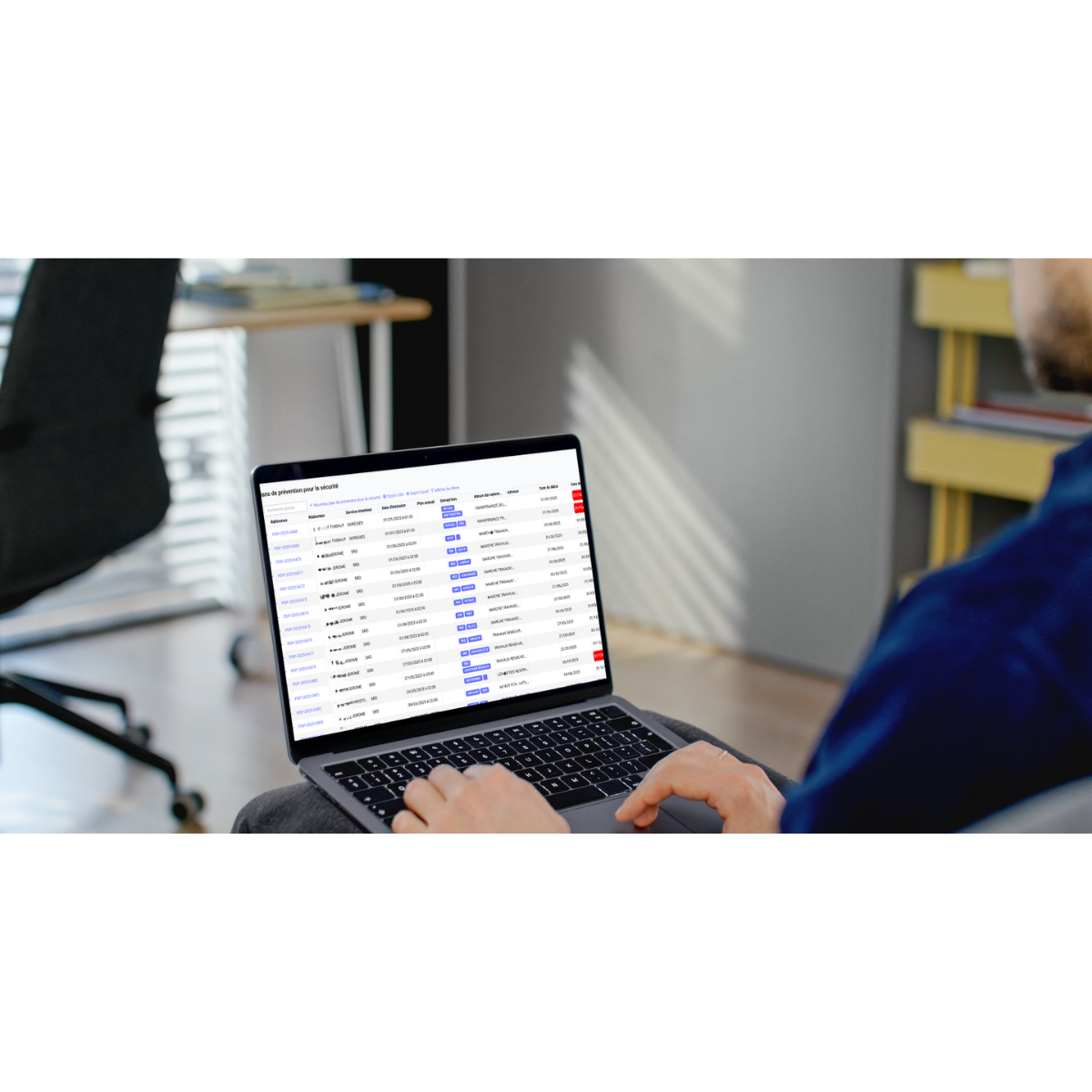
Structured in modules, it covers the entire intervention cycle: preparation of interventions, planning, field operations, debriefings and reporting. It can also be integrated into prevention plan software to manage the risks and safety procedures associated with interventions.
The platform stands out thanks to its native interoperability with legacy systems, remote meter reading and monitoring infrastructures. It natively integrates a CMMS module. This approach ensures information consistency and a unified view of equipment.
Advanced visualisation features and interactive maps facilitate analysis and operational management. Configurable processes allow operators to adapt the tool to their business processes without specific development.
The mobile application ensures optimal use by field teams, even in offline mode.
Altsis supports businesses, local authorities and network managers throughout all phases of the project. This includes defining requirements, configuration, training, change management, support and customer service. The solution thus becomes a real performance driver for network maintenance and supervision.
Network performance requires digitalised intervention management
Intervention management is a key issue in ensuring network performance and service continuity. Dedicated software structures, simplifies and optimises all operations. The Pégase solution offered by Altsis provides a robust and scalable framework to meet these challenges. Find out more and contact our teams to take the next step.
Would you like to see the features of PEGASE in action?