

Electrical hazards remain one of the most critical dangers in industrial environments, technical facility maintenance, and network operations. Leakage currents, electric arcs, and unexpected energisation can cause serious accidents, sometimes fatal. Electrical lockout is an essential procedure for neutralising all sources of energy before work begins. It ensures the safety of teams and regulatory compliance.
This article provides a comprehensive and structured overview of electrical lockout : definition, principles, legal framework, steps, formalised procedure and introduction to Altis tools, enabling you to master the process.
What is electrical lockout?
Electrical lockout/tagout refers to all operations designed to isolate and secure an electrical installation in order to prevent any accidental reconnection to the power supply. This is particularly important during maintenance or repair work. It involves switching off the power supply and physically locking the circuit breakers. Checking that there is no voltage ensures that all power sources are completely neutralised.
The purpose of recording is to avoid any confusion between shutdown and power-off, a major factor in serious accidents, even at low voltage.
The French regulatory framework is based on:
- The NF C 18-510 standard, approved by AFNOR, which defines the requirements in terms of safety, electrical accreditation, procedures and responsibilities of those involved.
- The Labour Code, requiring employers to implement appropriate preventive measures and control energy sources.
Lockout/tagout applies to many areas : industrial maintenance, network work, building interventions, and targeted repairs. It is also essential in electricity network management activities carried out in particular by Local Distribution Companies (LDCs).

Why is lockout essential?
Lockout/tagout is the primary defence against the risks of electrocution, electric arc or unexpected re-energisation. Its primary purpose is to protect workers by eliminating all hazards during the work. Statistics show that failure to implement lockout/tagout or its partial implementation remains a major cause of serious accidents in electrical maintenance.
The employer is required to assess risks and implement technical protective measures. They must also ensure that staff, particularly those responsible for the work, are trained and authorised. Finally, the employer must provide the necessary lockout equipment.
The NF C 18-510 standard specifies that lockout operations must be carried out by an authorised and competent person. This person must have a thorough understanding of the installation and the associated risks.
The lockout officer plays a central role : they identify energy sources, secure the installation and lock out the shut-off devices. They check that there is no voltage and remain responsible for unlocking the equipment.
The general principles of lockout
All lockout procedures are based on several fundamental principles. The objective is to ensure the complete and unequivocal safety of installations such as electrical panels. The five steps of electrical lockout are:
- Power off: physical separation of the installation from power sources, by means of a disconnector, disconnection, removal of fuses or equivalent devices.
- Lockout: mechanical locking of switching devices in the open position. This is usually done using lockout padlocks or standardised locking devices. Clear signage is then affixed to indicate the lockout status.
- Voltage absence check : mandatory step using a compliant tester to ensure that the installation is actually de-energised before starting work.
- Earthing and short-circuiting (if necessary): This is essential when accidental re-energisation, residual energy sources or induced voltage are possible.
- Signage and documentation formalisation: log sheets, labels, traceability and multiple logs in the event of simultaneous interventions.
These principles guarantee absolute security, even in the presence of complex networks or redundant circuits.
Steps for electrical lockout
The stages of lockout, as defined by french standard NF C 18-510 and professional guidelines, form a rigorous procedure that is often divided into six chronological phases:
- Pre-identification and risk analysis;
- Separation of voltage sources;
- Lockout of cutting organs;
- Identification and tagout;
- Verification of absence of voltage;
- Earthing and short-circuiting if necessary.
These phases form a coherent chain aimed at preventing any accidental re-energisation and ensuring a completely safe environment for workers. Each phase must be strictly adhered to : the slightest omission can expose the operator to a serious risk of electrocution. This is particularly the case in the presence of multiple circuits or emergency networks.
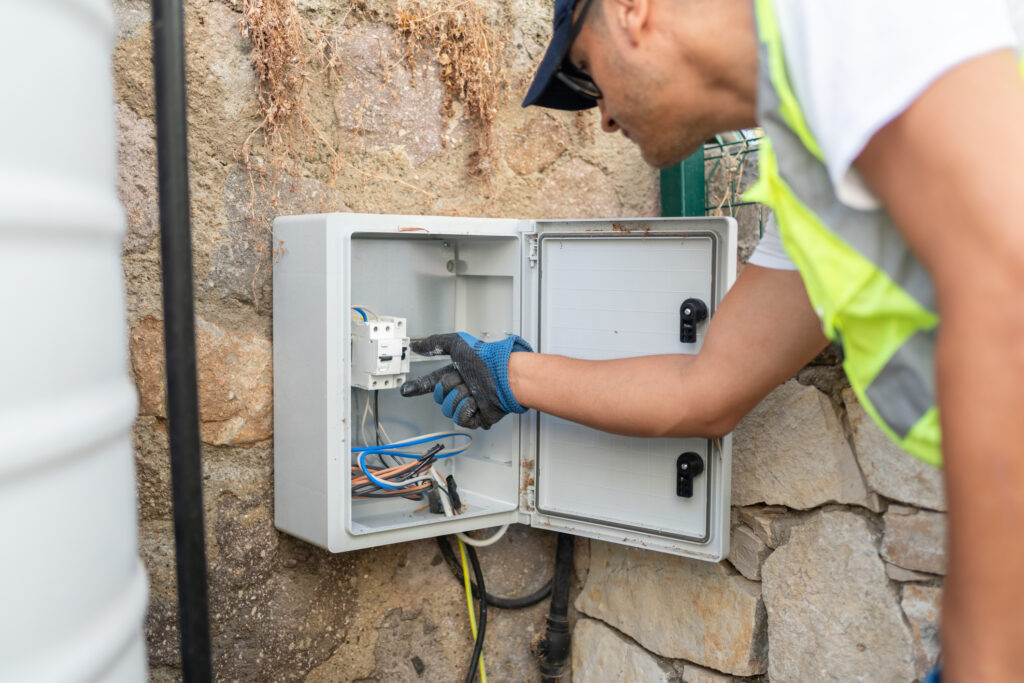
Electrical lockout procedure
Beyond the technical steps, lockout is based on a formalised, documented and systematic procedure. It must include:
- A preliminary risk analysis
- A precise description of the installation
- A definition of the roles and responsibilities of each stakeholder
- Lockout points
- Power-off and safety measures
- Documentary confirmation (certificate of deposit).
This formalisation ensures traceability, regulatory compliance and common understanding among stakeholders. It also makes it possible to anticipate the specific features of installations, in particular redundant power supplies, generators or photovoltaic panels, which require increased vigilance. These specific features can be grouped together in an electrical logbook.
A clear procedure is an essential element of prevention and operational quality.
Why choose Altsis solutions?
Altsis supports companies in the secure and documented management of electrical work.
Thanks to its Pégase solution for digitalised management of electrical installations, Altsis facilitates the creation and updating of lockout procedures.
Maintenance teams thus have quick access to log sheets, which are an integral part of managing access to electrical installations.
The platform also enables complete traceability of operations: who logged what, when, on which installation and according to which procedure. Safety managers and operators have a comprehensive overview. The solution improves regulatory compliance, reduces the risk of error and optimises audits.
The Pégase software is therefore a valuable tool for rigorous, efficient and fully controlled recording.
Would you like to see ALTSIS’s software solutions in action?
Electrical lockout: an essential element of safety in electrical environments.
Electrical lockout is an essential part of any electrical installation safety procedure. By applying a rigorous procedure that complies with french standard NF C 18-510, companies protect their workers. They significantly reduce the risk of accidents.
To go further and secure your operations in the long term, discover the Pégase solution offered by Altsis.