
Electrical hazards are omnipresent in professional environments, whether in industrial facilities, commercial buildings or public transport or distribution networks. A simple mistake can have serious consequences: electrocution, fire or even death. To prevent these dangers, electrical certification is a legal requirement. It is also an essential tool for preventing and controlling risks.
This article explains what electrical accreditation is, why it is essential, who it is for and how to obtain it. The article also describes Altsis’ Pégase solution, which enables better control of electrical work, particularly the management of electrical accreditations.
What is electrical accreditation?
Electrical accreditation is an official recognition, provided for in the Labour Code (Articles R4544-9 to R4544-11). It certifies that an employee has the necessary skills to work safely on or near electrical works and installations. It is not limited to electricians. Anyone who works in an environment presenting an electrical hazard, even for non-electrical tasks (maintenance, cleaning, construction work), may be affected, including temporary workers.
This authorisation is based on three pillars:
- Knowledge of electrical hazards and preventive measures.
- Mastery of procedures and techniques (lockout, tagout, use of PPE – Personal Protective Equipment).
- Validation by the employer, who issues the authorisation after appropriate training and an assessment of skills.
It applies to two types of operations:
- Electrical work: direct interventions on circuits or equipment.
- Non-electrical work: activities near live installations.
In summary, electrical accreditation is a regulatory requirement and a guarantee of safety. It is essential for protecting workers and preventing serious accidents.
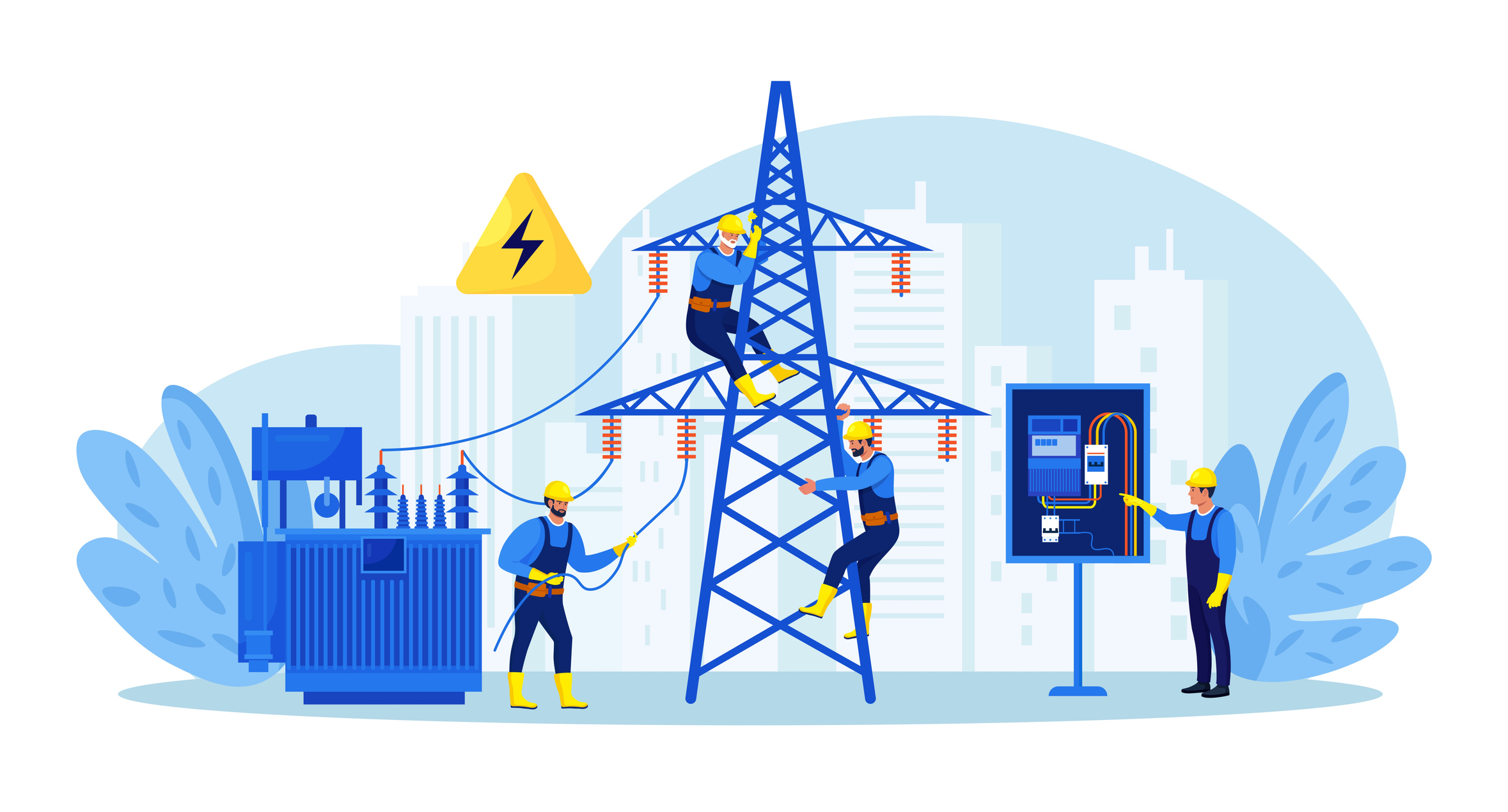
The different levels of electrical accreditation
Electrical accreditation is divided into several levels, identified by symbols and letters:
The first capital letter indicates the areas of tension in the structures on which the person holding the authorisation is required to work:
· B: LV (Low Voltage) or ELV (Extra Low Voltage) installation
· H: HV (High Voltage) installation
A second character specifies the nature of the operations that the holder may perform:
- 0: Non-electrical work
- 1: Electrical work
- 2: Electrical works supervisor
- C: Consignment Officer
- A: General Operations Officer (low voltage only)
- S: Basic intervention officer (only in BT)
- P: Operations on photovoltaic installations
- E: Four types of specific operations: Testing, Verification, Measurement, Manoeuvring
This second character may be supplemented, where applicable, by a second index:
- V: Working in the vicinity of live exposed parts
- T: Live working (TST)
- N: Live Working (NST)
- X: ‘Special’ operations defined by a security instruction.
Difference between VAT and VAT-exclusive prices:
- BT: Voltage ≤ 1,000 V.
- HT: Voltage > 1,000 V.
Examples:
B2T – Authorisation to carry out live electrical work on equipment with a voltage level ≤ 1,000 V.
B0 H0 – Authorisation to carry out non-electrical work on low and high voltage systems.
What does ALTSIS offer?
ALTSIS offers a digital solution to ensure compliance: PEGASE
What are the employer’s obligations with regard to electrical accreditation?
The employer is responsible for the safety of its employees, particularly with regard to electrical hazards. It must implement an organisational structure that complies with the Labour Code and standard NF C 18-510. Its obligations can be broken down into several key points:
- Assess risks: Identify areas and operations that present an electrical hazard, including for non-electrical work carried out nearby.
- Train and certify: Provide training appropriate to the job and issue certification after assessing skills. Certification is not automatic: it is based on the employee’s actual ability to apply safety rules.
- Provide protective equipment: Supply PPE (Personal Protective Equipment) (insulated gloves, helmet, goggles, insulated mat) and regularly check that it complies with regulations.
- Keep records and monitor progress: Keep documents related to authorisations (certificates, issue dates, renewals) and set up a traceability system.
- Renew regularly: Generally every three years or in the event of a change of position, technology or risk evolution.
- Inform and raise awareness: Maintain a safety culture through regular reminders, notices and clear procedures.
These obligations are not merely legal. They are essential for preventing serious accidents, protecting workers and ensuring regulatory compliance during operations on structures.
Training and certification: how to obtain electrical accreditation?
Electrical accreditation cannot be improvised. It is based on mandatory initial training, in accordance with standard NF C 18 510, which aims to guarantee the safety of those involved. This training is essential before any accreditation can be issued by the employer.
Contents of electrical accreditation training:
- Theory: principles of electricity, risks associated with electrical current, neighbouring areas, lockout and tagout procedures.
- Practical: real-life scenarios, use of personal protective equipment (PPE), safety procedures.
- Regulations: legal obligations, responsibilities, reading authorisation symbols.
Duration and terms of electrical accreditation training:
Generally, electrical accreditation training lasts between one and three days, depending on the level of accreditation (B0, BS, BR, BC, etc.).
The training must be provided by an approved organisation, either internal or external to the company.
A final assessment must be carried out to verify understanding and ability to apply the rules.
Documents issued during electrical accreditation
The following documents are issued during electrical accreditation training:
- Training certificate: issued by the training organisation.
- Effective authorisation: issued by the employer after validation of skills and medical fitness.
Renewal of electrical accreditation
Electrical accreditation must be renewed every three years or in the event of a change of position, technology or risk.
In summary, training is the cornerstone of electrical safety. Without it, no authorisation can be legally granted.

Electrical accreditation and NFC 18-510 standard
The NFC 18-510 standard is the essential reference for electrical risk prevention in France. It defines safety rules, proximity zones, authorisation levels and procedures to be followed to ensure the protection of workers. All training and authorisation must be based on this reference to comply with regulatory requirements, as specified in the NFC 18-510 standard.
Why choose Altsis?
Altsis’ Pégase solution offers numerous features related to the operation of industrial facilities such as distribution networks (electricity, gas, water, heat): activity planning, resource management, work order tracking, issuing access to facilities and lockouts, etc. It simplifies the management of electrical authorisations by centralising data, deadlines and tracking documents.
Pégase enables you to digitise all documentation relating to the monitoring of electrical authorisations within your organisation.
This software solution ensures regulatory compliance and automates renewal alerts. In addition, it also facilitates training management, guaranteeing security and traceability for employers.
Electrical accreditation: much more than a formality
Electrical accreditation is much more than just an administrative procedure: it is a guarantee of safety for your teams and your facilities. Ensure your organisation’s compliance today by rolling out appropriate training courses and using Altsis’ Pégase digital monitoring solution.
Would you like to see the features of PEGASE in action?