Your electricity bill does not depend solely on the price per kilowatt hour. An increasing proportion of the total amount corresponds to the costs of transporting electricity, i.e. the use of public transmission and distribution networks in the distribution of electricity.
For large consumers (industrial or tertiary sector players), local authorities or SMEs, understanding tariff for the use of the public electricity networks (TURPE in French) becoming essential for effectively managing their energy expenditure.
This article provides a clear explanation of this complex tariff: its purpose, structure, impact on bills, and, above all, the potential for optimisation through careful data management.
Finally, we will see how Altsis supports its clients in this process through its innovative software tools.
What is the tariff for the use of the public electricity network?
The Tariff for Use of the Public Electricity Network is a regulated tariff set by the Energy Regulatory Commission (CRE in French) in France to finance the maintenance, development and modernisation of public electricity networks.
In practical terms, it pays network operators – RTE for high-voltage transmission, and Enedis (or Distribution System Operators – DSOs) for medium- and low-voltage distribution.
Every user of the network, whether an individual, business or local authority, contributes to this funding via the TURPE. The latter covers:
- the investments required to secure and modernise electrical infrastructure and networks;
- operating costs (maintenance, interventions, remote meter reading, etc.) borne by managers;
- energy transition programmes (connection to the renewable energy grid, smart metering, self-consumption, etc.).
The Energy Regulatory Commission (CRE in French) defines the terms and conditions for applying the Tariff for Use of the Public Electricity Networ) according to multi-year periods (Replacing TURPE 6, TURPE 7 has been in force since 1 August 2025).
This framework ensures transparency and economic balance in terms of requirements for efficient network operators, as well as consumer protection.
How is Tariff for Use of the Public Electricity Network structured?
The Tariff for Use of the Public Electricity Network is a combination of several tariff components reflecting the manner in which a user utilises the network.
Understanding this structure is the first step towards managing its costs.
The Tariff for Use of the Public Electricity Network is also based on the fundamental principle of tariff equalisation.
This means that the tariff for using public networks is independent of the distance travelled by the electricity.
The main components of the Tariff for Use of the Public Electricity Network
- The management component covers administrative costs such as invoicing and customer service.
- The metering component covers costs related to meter management and reading, including digital services provided by smart meters (Linky, Enedis sensors, etc.).
- The withdrawal component depends on the contracted power (kVA) and energy consumption (kWh).
- The power share remunerates the capacity made available by the network.
- The energy share reflects the volume actually withdrawn.
- The power excess component. If the contracted power is exceeded, penalties are applied. These can quickly increase the bill if the power levels are not properly adjusted.
Price lists tailored to user profiles
The Tariff for Use of the Public Electricity Network is divided into two main categories (medium voltage-low voltage and highvoltage) and then according to the type of connection:
- BT ≤ 36 kVA (Tariff C5) for residential customers and small businesses
- LV > 36 kVA (LV C4 tariff) for local authorities, SMEs and commercial buildings
- HTA (Tariff C1-C2 HTA) for industrial sites and large public buildings
- HTB (CART tariff) for very large industrial consumers or specific infrastructure. Specific Grid tariff managed by RTE.
- Producers (low voltage or high voltage). Connection for electricity injection. This TURPE particularly concerns photovoltaic producers.
- Self-producers/self-consumers. Connection with partial or total injection. Collective self-consumption installations are subject to this Grid tariff.
Each profile benefits from hourly rate bands (peak hours/off-peak hours/peak periods), which reflect grid voltage and energy availability.
Example of breakdown on an invoice
Let us consider a tertiary site with 36 kVA on tariff C5:
- Energy component (transport): 40% of the “transport” line;
- Power share: 35% (fixed monthly cost based on the power subscribed);
- Counting component: 10%;
- Taxes and miscellaneous contributions: 15%.
Incorrect power estimates or uneven consumption across tariff bands can therefore lead to significant additional costs.
Optimisation of the Tariff for Use of the Public Electricity Network via Data
Optimising the Tariff for Use of the Public Electricity Network does not mean circumventing the tariff, but rather better adapting its parameters to the reality of its uses.
Consumption data, now accessible in real time thanks to smart meters, offers powerful levers.
Adjust the subscribed power ratings of the Tariff for Use of the Public Electricity Network
By analysing load profils, it is possible to identify the actual power demand of a site.
If the contracted power is too high, the company pays unnecessarily for capacity that it does not use.
Conversely, insufficient power leads to costly overruns.
Precise readjustment of contracted power therefore reduces fixed costs while avoiding penalties.
Overshoot detection and clipping
Monitoring tools enable real-time detection of consumption peaks and alert site managers before an excess occurs.
Some solutions go further with automatic load shedding devices: when power approaches the threshold, certain non-priority equipment is temporarily shut down to avoid penalties.
Usage management according to tariff periods
The tariff for the use of the public electricity networkintroduces differentiated tariff bands. By managing consumption (for example, by shifting certain uses to off-peak hours), it is possible to smooth the load curve and reduce the variable portion of the TURPE.
This demand response strategy is particularly effective for:
- tertiary buildings (heating, ventilation, air conditioning);
- industrial sites with flexible cycles;
- local authorities with multiple public buildings.
The central role of data in analysing the Public Electricity Network Usage Tariff
Data from smart meters and energy management systems (EMS, GTC, GTB) enable:
- view load curves in real time;
- generate customised alerts;
- simulate the financial impact of pricing scenarios;
- consolidate multiple sites into a multi-site vision for large property portfolios.
This information forms the basis of an advanced energy management strategy, in which TURPE becomes a lever for optimisation in its own right.
How does Altsis help you manage your Public Electricity Network Usage Tariff?
Altsis supports network managers, suppliers, companies and multi-site operators in understanding and mastering TURPE thanks to its specialised software tools.
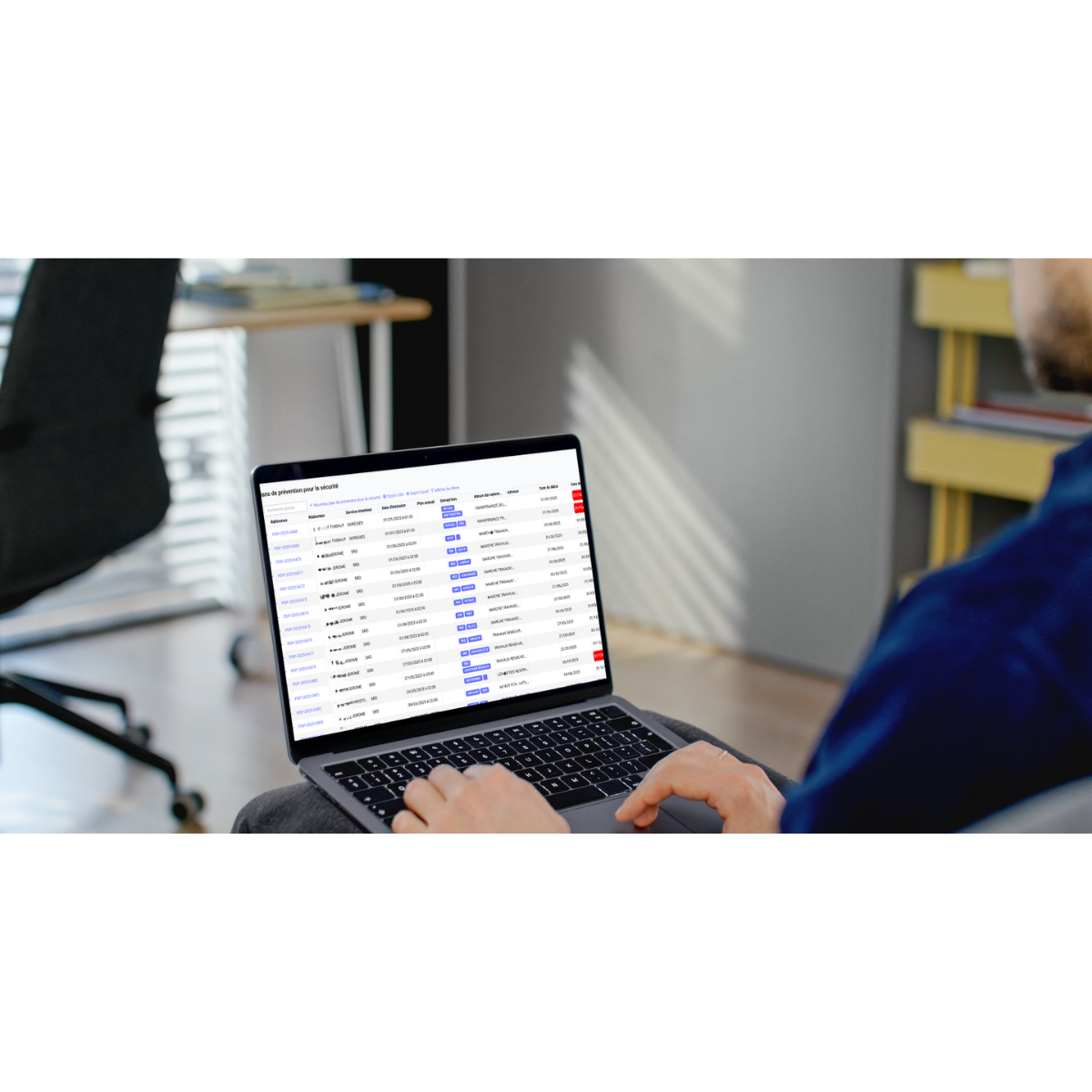
Altsis’ Opéra software solution is designed to assist public and private sector stakeholders in managing TURPE.
Direct connection to network operator data
Altsis platforms connect to metering data from RTE, ENEDIS and, more generally, all DSOs to automatically retrieve updated load curves and tariff parameters.
This integration ensures reliable and continuous analysis without manual input.
Optimisation and customised reports
Key indicators enable monitoring of consumption, contracted power, overruns and associated costs.
These customised reports also incorporate Tariff for the use of the public electricity network optimisation algorithms capable of analysing load curves, simulating different tariff scenarios and recommending power adjustments or control strategies.
Thanks to these advanced calculations, it is now possible to minimise penalties, anticipate overruns and reduce the overall bill by exploiting real-time data.
Tariff for the use of the public electricity network optimisation use case: a multi-site industrial consumer
A multi-site industrial consumer used the Altsis solution to analyse its metering data.
Results:
- estimated reduction of 10 to 15% in TURPE-related costs thanks to the revision of contracted power
- consolidated view of all energy assets.
Thanks to Altsis, tariff for the use of the public electricity network becomes a lever for savings and control, rather than just an opaque line on the bill.
ALTSIS & Tariff for the use of the public electricity network
Need help mastering tariff for the use of the public electricity network?
Tariff for the use of the public electricity network, a little-known lever for energy optimisation
Although often overlooked, tariff for the use of the public electricity network represents a significant and variable component of your electricity bill.
By understanding its structure and utilising the available data, public and private stakeholders can use it as a means of optimising energy efficiency.
Altsis solutions provide the tools needed to turn this complexity into opportunity.
Request your tariff for the use of the public electricity networkassessment or a demonstration of our tools today to regain control of your electricity transmission costs.